
The Future of Transport on Track: Thales Unveils Isabella’s Vision for Clean, Autonomous Driving
Isabella’s Magnetic Car is an imaginative transport concept that explores how future vehicles could be cleaner, safer and more accessible. Created while she was in Year 2, Isabella’s idea focused on using magnets and voice control to power and operate a car, offering an alternative to traditional petrol and diesel vehicles.
The Thales Crawley ProtoTeam selected the idea because of its strong environmental message and its ambition to address real-world challenges. The team was particularly drawn to the concept’s focus on reducing carbon emissions while encouraging new ways of thinking about transportation. The idea also presented an exciting engineering challenge, combining sustainability, automation and accessibility within a single concept.
A key aim throughout the project was to remain faithful to Isabella’s original vision. The team explored how magnets could be used to move and guide a vehicle while retaining the voice-controlled operation that formed a central part of the idea. They also considered how the concept could support people with mobility challenges by reducing the need for manual driving controls.
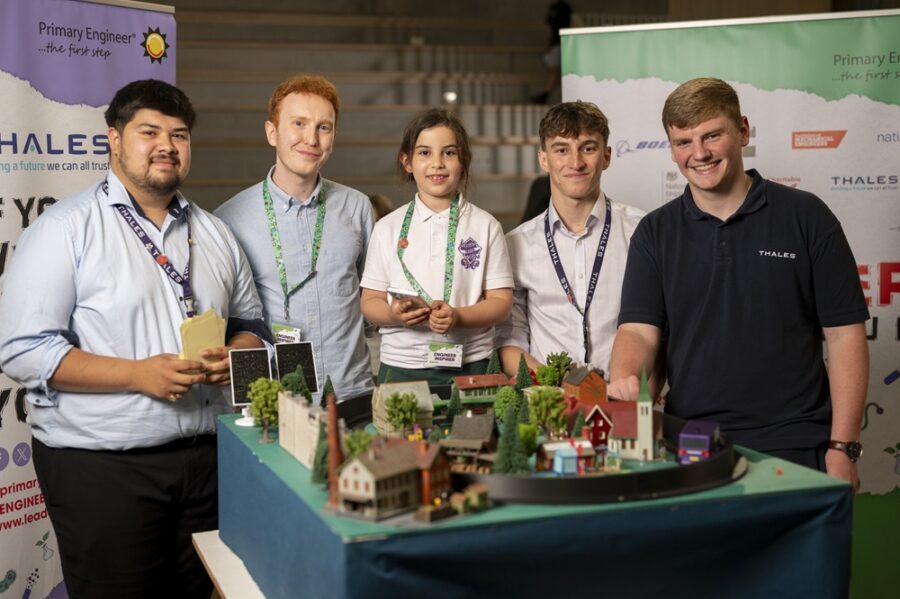
As a full-sized vehicle was beyond the scope of the project, the team developed a proof-of-concept prototype to demonstrate the principles behind the design. The prototype uses magnets integrated within a track and a vehicle designed to respond to magnetic guidance. While scaled down, it preserves the core features of the original idea and demonstrates how magnetic propulsion and autonomous movement could work together.
The development process involved creating concept sketches, digital renders and 3D printed models. During this stage, the team refined the vehicle’s design, introducing features such as improved visibility and enhanced safety elements while maintaining the overall identity of Isabella’s concept. Multiple prototype iterations were produced as the team tested and improved the design.
The project also explored how magnetic guidance could provide an alternative approach to self-driving technology. Rather than relying solely on sensors and cameras to follow a route, the concept uses magnets to help position and direct the vehicle, reducing the need for constant steering corrections and supporting the idea of autonomous travel.
Throughout the project, the team focused on creating a concept that combined environmental responsibility with accessibility and innovation. By investigating alternatives to traditional vehicle propulsion and exploring voice-controlled operation, the prototype demonstrates how engineering can be used to imagine new possibilities for future transport.
The Magnetic Car showcases how a young person’s idea can inspire creative engineering thinking. By reimagining the way vehicles are powered and controlled, Issabella’s concept highlights the potential for innovative solutions that could contribute to safer, cleaner and more accessible mobility in the future.
The finished prototype was officially unveiled on 25th June at the London regional award ceremony hosted at Kingston University.
The 2026/27 Competition is Officially OPEN so get involved to experience the fun! Register for full competition access and resources here: https://leadersaward.com/resource-area-registration/