

Case Study: Small Kent School, Big Pupil Ideas – How The Pilgrim School has embedded a lasting engineering legacy
Introduction
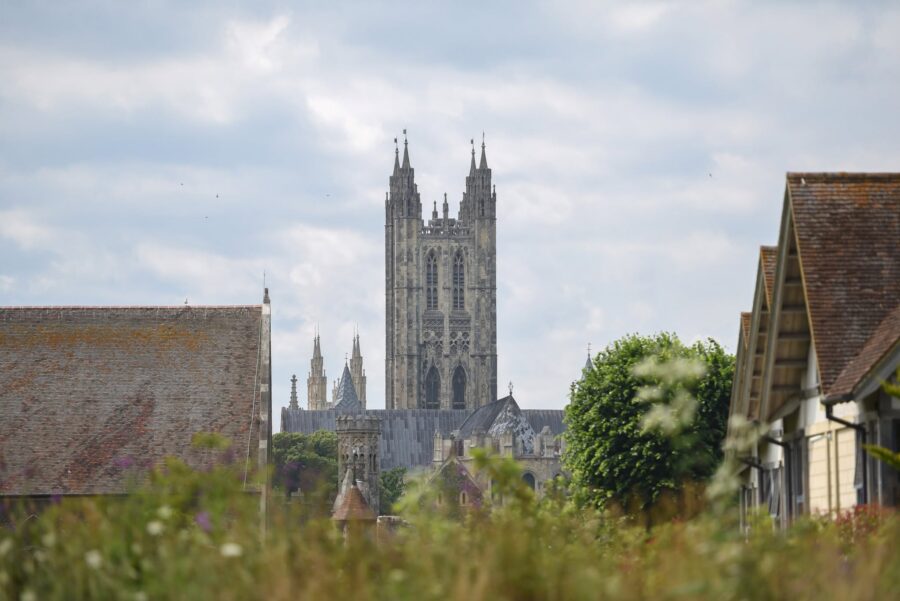
Since the 2023–24 academic year, The Pilgrim School in Kent has embraced Primary Engineer’s ‘If you were an engineer, what would you do?’ Leaders Award Competition as a cornerstone of its Design & Technology and STEM enrichment. Led by Emma Cavey, DT Subject Lead, the school has taken part in the competition every year, gradually scaling the initiative to a whole-school endeavour.
This case study explores how a small village primary school’s simple online discovery has grown into a lasting legacy of “engineering curiosity” that resonates with pupils, teachers, and families alike.
Why were they involved?
The journey began when Emma Cavey, then a Newly Qualified Teacher (NQT) shadowing the DT Curriculum Lead at the school, discovered the competition on social media. At the time, DT had limited visibility within the school, and Emma saw this as the perfect opportunity.
“I wanted to encourage the children to see DT as exciting and thus far our school didn’t have that many DT based experiences the children could talk about. I ran the competition the first year and sent all the entries off not thinking much would come of it!”
When the official certificates came back for every pupil who entered, the reaction was electric. The buzz around engineering began to grow and when the DT Curriculum Lead left the school for another job, Emma was given the responsibility of leading DT and from that point on, the competition became an annual highlight.
What has the experience been like?
According to Emma, there’s a yearly anticipation for the opening of the competition with a lot of shared excitement across the school.
“Children find me across the school to tell me about their inventions all year round and they are so excited when we finally launch the competition as open! We run the competition as homework over the Feb half term and teachers are encouraged to watch the live interviews with their classes before this. Shortly after the competition closes we run our week long STEM week and the children love getting involved in hands on engineering science and maths activities.”
Engineer engagement
Pupils are tasked with interviewing an engineer before being asked to identify a problem in the world around them and coming up with a creative, engineered solution to that problem. Teachers get the opportunity to be introduced to an engineer and bring them into the classroom or take the class, and on occasion, the whole school join one of our high-profile live interviews, giving them the opportunity to ask the questions that matter to them. This introduces them to inspiring people they can identify with, helps broaden knowledge and career aspirations and dismantles stereotypes.
Emma notes the importance of this engagement:
“We are really lucky to have families with STEM and engineering backgrounds willing to come into school. This year we have encouraged our STEM families to come in a talk to the children about their roles in STEM and we are very lucky to have had such a great level of participation! We are a small village primary school in Rochester and have such ranging demographic it really makes a difference when we have real people able to give up their time to visit us and inspire the children. We are lucky to be located near a historic town as the children are able to experience local visits rich in historic meaning, we want to create the same thing for inspiring our engineers of the future by inviting as many people as possible to come and inspire the children. This is not always possible with budgets and our location in Kent so having access to live lessons and interviews online has also been very useful. For me, as a DT lead, I am spending more time building relationships with local businesses and engineers to make these visits as frequent as we can throughout the year.”
“We have filled a whole week of activities, workshops and local businesses coming in to spend time inspiring our young children engineers of the future. This week is the biggest STEM week we have run and the children’s growing interest in the subject and their love for all things primary engineer has inspired us to put more and more resources into these weeks.”
Pupil recognition
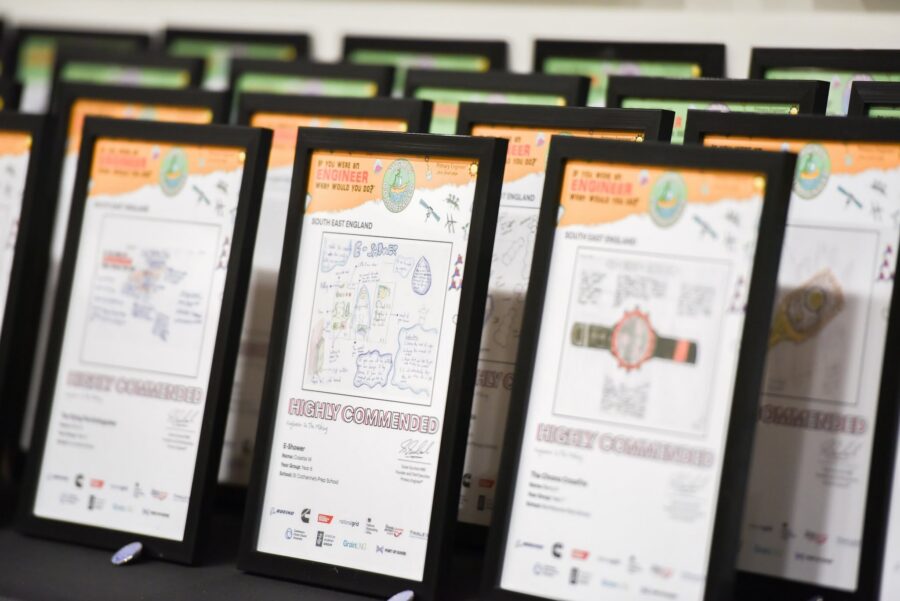
All entries are read and graded by engineering professionals, with every single pupil who takes part receiving a named and graded certificate. They are graded based on the quality of the idea and the problem, large or small, that it is solving. Shortlisted entries are then sent to exclusive judging days where the invited judges, formed from leading industry and engineering professionals, select the designs to be celebrated at our 25 regional Award Ceremonies. The competition culminates in exciting regional public exhibitions and award ceremonies, where teachers, pupils, their families and industry professionals are invited to celebrate ingenuity and create lasting memories. The shortlisted designs are displayed, and the winners and those who are highly commended are invited on stage to receive their awards, with a surprise award for the judge’s favourite at the end.
For Emma, this element is very important.
“Every single entry being seen by an engineer is something we market to the children all the time to encourage them to put the most effort into their designs. Bringing the families in for [the regional Awards Ceremonies] celebration is really important and seeing their children’s entries displayed in exhibition halls is something the children and families are so proud of.”
Between 2023 and 2026, the school has achieved exceptional success with nine winning pupil entries and six Highly Commended pupil designs.
Emma continues
“We have been very proud of all the winners that have been in the exhibitions so far and we hope this will continue as we continue to love taking part in the competition.”
Prototypes
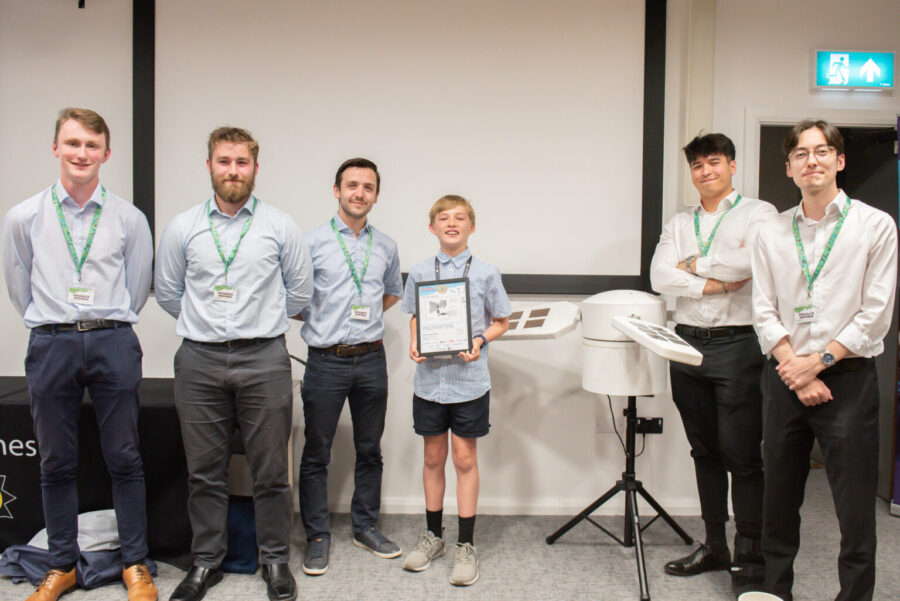

Each year, Primary Engineer’s university and industry partners choose from thousands of shortlisted entries submitted by pupils across the UK, which are displayed at our public exhibitions, to turn into a prototype. They are built by teams of students, early career engineers and apprentices working alongside the pupils who originated the ideas. Primary Engineer’s partners select an idea based in what resonates with them and what they see real world potential in.
After the prototypes are unveiled at our exhibitions and awards ceremonies in the summer term, applications open for the Primary Engineer MacRobert Medal, a collaboration between Primary Engineer and The MacRobert Trust to recognise the innovation and creativity of the next generation of engineers.
In 2024-25, Alex, who was a Year 5 pupil at the time at The Pilgrim School, had his ‘Hummingbird 3000’ idea selected by Thales (Crawley) to be brought to life.
In June 2025, after the unveiling, Alex described the experience as ‘an actual dream come true’. Expanding to say:
“The incredible opportunity to work with the Thales team has been a privilege I could never have thought I’d get. From the first meetings online to the unveiling at Canterbury this experience has been mind-blowing and exciting. Even having a glimpse of everything Thales does would have been extraordinary but to go inside [visiting Thales in Crawley] and get a close look and even use some of the marvellous technology they use is an occasion I never thought I’d have. Having only seen the prototype in pieces, even the looming figure of the tall structure made me gasp even with a cloth on it. Then seeing the final product of my idea was an actual dream come true. Seeing my idea of a wind-turbine fused with solar panels turn into a genuine machine is a journey I’ll never forget.”
This impact wasn’t just felt by Alex but also felt by Emma and the school community, as Emma explains:
“We could not have had a better experience with Thales than we had with Alex and the team. They were absolutely amazing at keeping Alex involved in the process, we had regular meetings online and they visited school twice which helped to build the children’s love for engineering! Any changes were communicated with Alex and he still had a choice in what was changed and what bits were especially important to him and the original design. Our trip to Thales was the absolute icing on the cake and a cherished day out for all that were involved. We had such an amazing day, seeing engineering from the shop floor and what some of those technologies are used for – flight simulators and VR flight simulators were the absolute peak of excitement for the children! The way Thales made us feel so welcome after knowing they usually only have visitors from secondary schools and universities, they made primary aged children feel so excited and wowed! We came away gushing about it for weeks!”
“Since Alex [had his idea turned into a prototype], the children refer to him as an engineer and how he has inspired some of the children with their designs. Alex is no longer at the school as he has joined secondary school now but he is forever going to be someone the children refer to when we talk about engineering. For Alex I think the highlight was being able to have a go in the flight simulator, and also going to the awards ceremony in London. The Primary Engineer MacRobert awards were absolutely brilliant and a time for Alex to see all the other prototypes in real life. It was an amazing afternoon!”
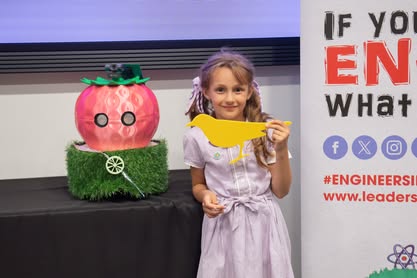
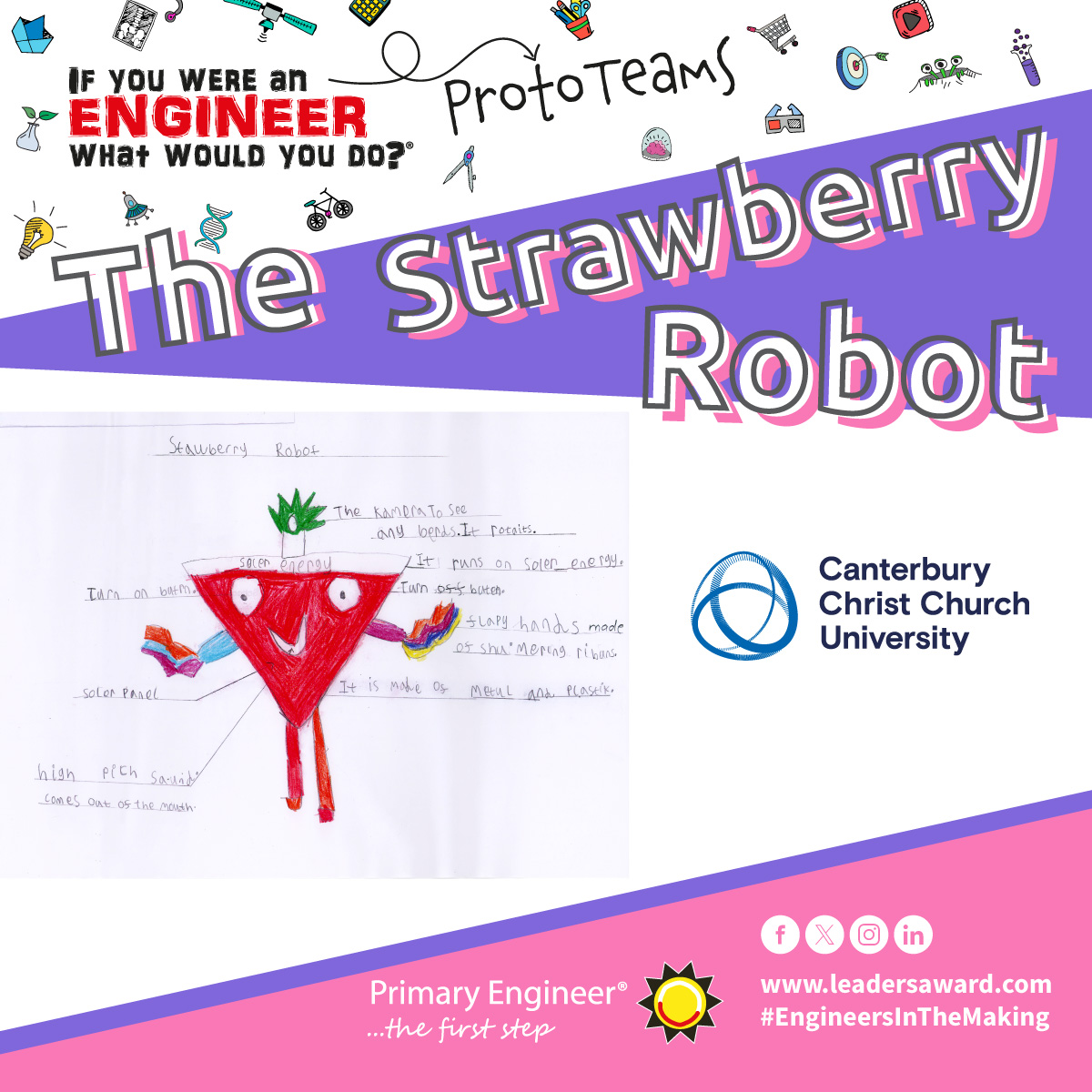
In 2025-26, Daniela, a Year 1 pupil at The Pilgrim School, had her idea ‘The Strawberry Robot selected by Canterbury Christ Church University to be brought to life. Speaking at the time Emma said
“It was quite a shock to read the message that informed us that we would have another prototype winner! We are all so proud of Daniela and her family are going through a bit of a rough time at the moment and so for them this couldn’t have come at a better time. We can’t wait to be in contact with Canterbury and see what they make for Daniela.”
The team from Canterbury Christ Church University chose this idea because it tackles a familiar problem in a clever and positive way. Birds eating strawberries can be frustrating and the idea of a robot that can gently scare them away is both practical and engaging. The project also offers a great opportunity to explore modern tools such as artificial intelligence and robotics while keeping the solution friendly and accessible. The team felt the Strawberry Robot had strong potential to grow into a realistic prototype. It also allowed them to explore detection movement and interaction which makes it a rich and rewarding engineering challenge.
‘The Strawberry Robot’ prototype was officially unveiled on 16th June at the South East England regional award ceremony.
Conclusion
The Pilgrim School’s journey shows the transformative impact of embedding real engineering experiences in primary education. From industry partnerships to public exhibitions and hands‑on STEM celebrations, the Leaders Award competition has ignited creativity, confidence, and aspiration in a whole school community.
Get involved
Huge thank you to Emma from The Pilgrim School in Kent for sharing these valuable insights. If you have worked with us and want to share your experiences, contact us on marketing@Primaryengineer.com
Learn more: Get your school involved in the free competition today: https://leadersaward.com/