
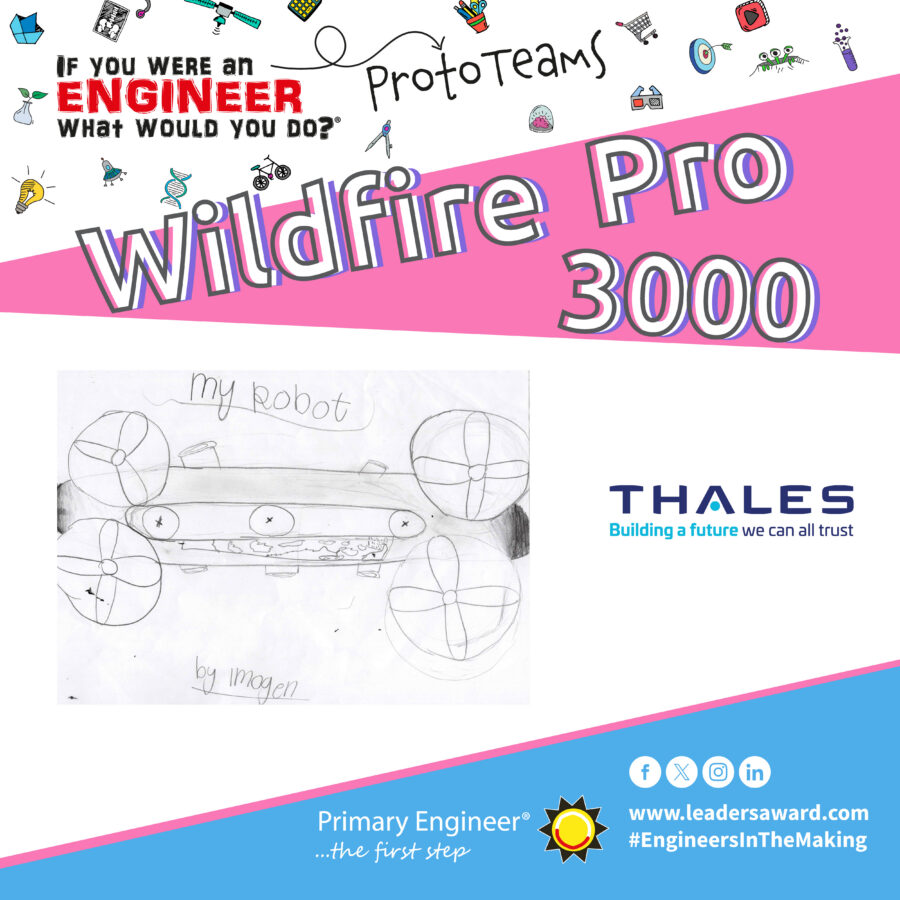
A fantastic first update on Wildfire Drone 3000!
Introduction to the ProtoTeam
The Thales Glasgow ProtoTeam is excited to announce their Primary Engineer project for 2026, the Wildfire Drone 3000. This creative and practical idea was created by Imogen in Y2. Her design focuses on protecting landscapes and communities by helping detect wildfires early.
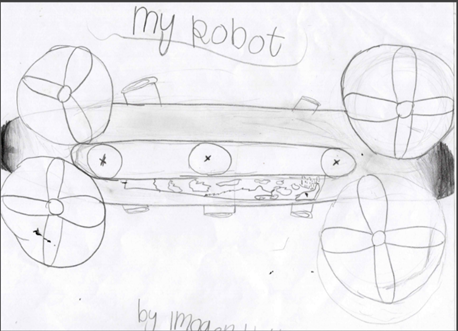
After reading Imogen’s letter and studying her drawing, the team immediately knew this was the project they wanted to bring to life. Her passion for helping communities affected by wildfires was inspiring. The team was also impressed by the clear and thoughtful way she described what she wanted the drone to do and the questions she asked from an engineering point of view.
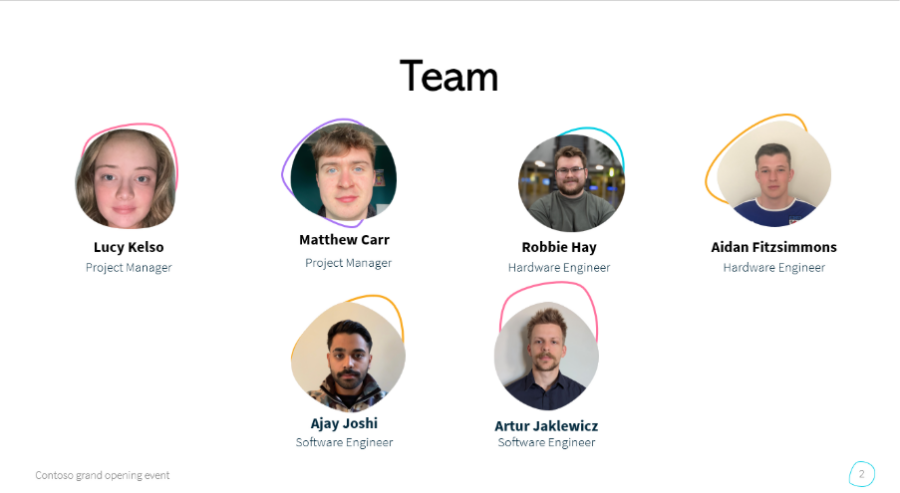
Why did they choose this idea to build
The Thales Glasgow team chose the Wildfire Drone 3000 because it addresses a very real challenge faced by communities around the world. Wildfires and grass fires can cause serious damage to the environment and put lives at risk. Early detection can make a crucial difference in reducing the spread and impact of these fires.
Imogen’s idea offered a meaningful and practical solution. The team felt the project had the potential to create a positive impact by helping emergency services respond more quickly when fires begin. This strong sense of purpose made it a perfect choice for the ProtoTeam to develop.
Starting the prototype
The team began by focusing on the first major challenge, getting the drone airborne. They started by assembling a basic iFlight X413 kit and then added key components including a video transmission unit, a high definition daytime camera, eight cell LiPo batteries, a flight controller and ELRS receivers. This created a strong foundation that is capable of flying for around twenty minutes at speeds of up to seventy miles per hour while remaining within safe altitude limits.
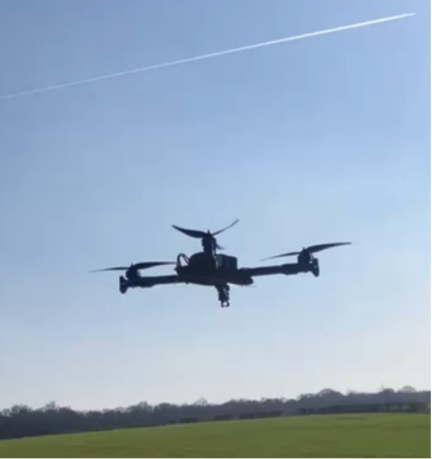
After initial calibration and tuning the first version of the drone achieved stable flight. With this success the team then shifted their focus to the advanced features outlined in Imogen’s design.
Imogen wanted the Wildfire Drone 3000 to include multiple cameras location awareness and the ability to share information with emergency services. To meet these requirements the team added a thermal imaging camera which allows the drone to detect heat signatures from early stage fires and operate in low or no light conditions. A GPS module was installed so the drone knows its position and can be tracked from the ground station. This also allows for route planning and basic autonomous features such as position holding.
To complete the communication system the team integrated telemetry radios between the drone and the ground station. This allows real time location altitude and detection data to be shared so that potential fire locations can be reported to the Scottish Fire and Rescue Service.
The updated version of the drone has now been flown to gain experience with the new systems. Work continues to fully refine and integrate the thermal imaging capability.
Next steps
The Thales Glasgow ProtoTeam is now planning an engaging STEM day in partnership with the Scottish Fire and Rescue Service. This event will focus on fire safety flight and the role of technology in protecting communities.
The team also plans to sign a Design Authority contract with Imogen in the coming weeks. They will work closely with her to understand how she imagines the final drone should look so the appearance reflects her original design as closely as possible.
Further updates will share how the Wildfire Drone 3000 continues to develop from a pupil idea into a working engineering prototype with real world impact.