
Case Study: The University of Southampton – Three-time consecutive medallist at the Primary Engineer MacRobert Medal
Introduction
The University of Southampton has been a long-standing partner of Primary Engineer’s ‘If you were an engineer, what would you do?’ Leaders Award competition in the South of England since 2017. Each year the university has formed a Primary Engineer ProtoTeam and selected an inspiring pupil entry from the competition, originally displayed at our public exhibitions in the summer term, to take from a drawn and annotated idea on paper to a fully formed prototype.
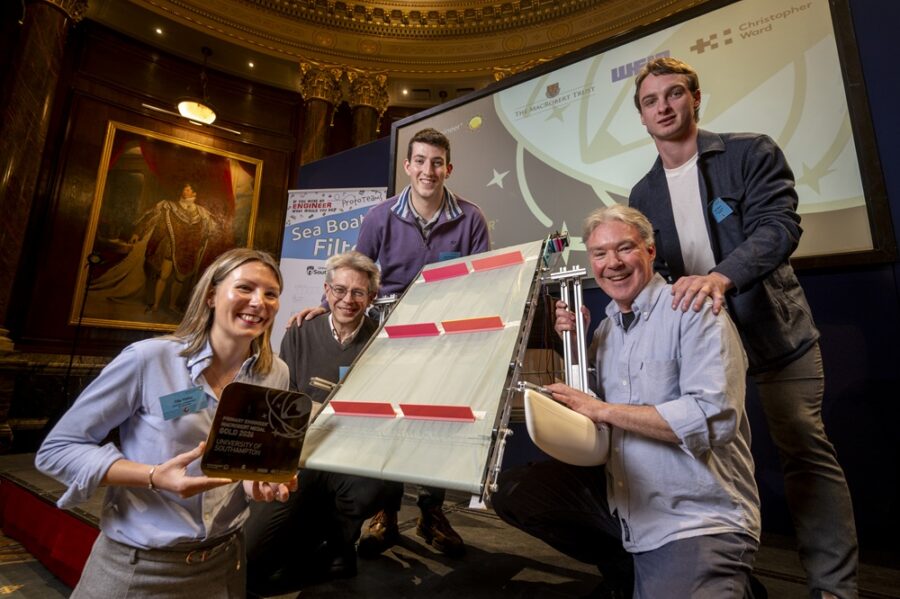
They have recently won a national engineering award for creating a floating vessel that could help keep rivers and seas free from litter, based on Mylah’s idea from Hunnyhill Ormiston Academy. This achievement marks the university as a three-time consecutive medallist at the annual Primary Engineer MacRobert Medal.
This case study explores the University of Southampton’s partnership with Primary Engineer as being so much more than just outreach. Stating “It helps us create a bridge connecting schoolchildren’s creativity, university engineering capability, and preparation for professional development.”
Why are they involved?
The university was already familiar with the competition, having previously hosted grading days and judging days. From there, Dr. Tim Woolman of the School of Engineering within the Faculty of Engineering and Physical Sciences at the University of Southampton, realised that bringing a school pupil’s idea to life as a working prototype would make an exceptional real-world challenge and project for final-year undergraduates engineering students.
Reflecting on the initiative, Tim noted that students “experienced all the challenges and rewards of engineering projects – with the added satisfaction of realizing aspects of pupils’ creative ideas and presenting them and their classmates a young engineer’s experience of seeing a design come to life. The projects connect our students with schools, communities, engineers and public audiences, making learning more accountable and much closer to professional practice.”
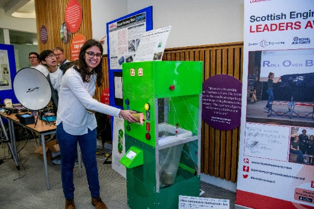
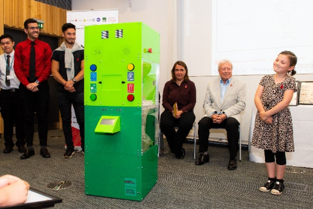
The prototype journey began in 2018, when a dedicated student “Prototeam” brought Bella Hunt’s 2017 winning invention, the “Fun Noisy Rubbish Bin,” from concept to reality.
Tim explains the process and outcome of that first prototype. “With help from Primary Engineer, colleagues in the School of Engineering were able to see the potential to create a suitable project brief for a group of final year undergraduate Engineering students to build on primary pupil Bella Hunt’s vision for a ‘Fun Noisy Rubbish Bin’. Bella’s concept stood out from those offered to us from the Primary Engineer Leader’s Award.”
“In Bella Hunt’s clear sketch of a ‘Fun Noisy Rubbish Bin’, we could see great potential for students to apply their mechatronic engineering skills and tackle the design challenge of making collecting rubbish fun in an innovative way. The project achieved the result we envisaged, to offer a working prototype. This both showed Bella and those attending the end of year Award ceremony a great result. It was also used in public outreach to stimulate interest in engineering, such as at the next University of Southampton’s Science & Engineering Day attended by Primary Engineer and through our Design Show.”
Since then, the university has continued building numerous prototypes every year.
For the university staff, the collaboration brings immense personal and professional rewards. As Tim shares “The staff get to see what curiosity and creativity abounds in primary school pupils and how their insight into problems and opportunities complements what we can offer our students in preparing them to pursue an engineering development process. And when our recorded voice might be used in a fun, noisy rubbish bin, or when our advice supports learning that students appreciate and a result that parents can also delight in, we feel grateful that our contribution has some tangible wider impact.”
What has the experience been like?
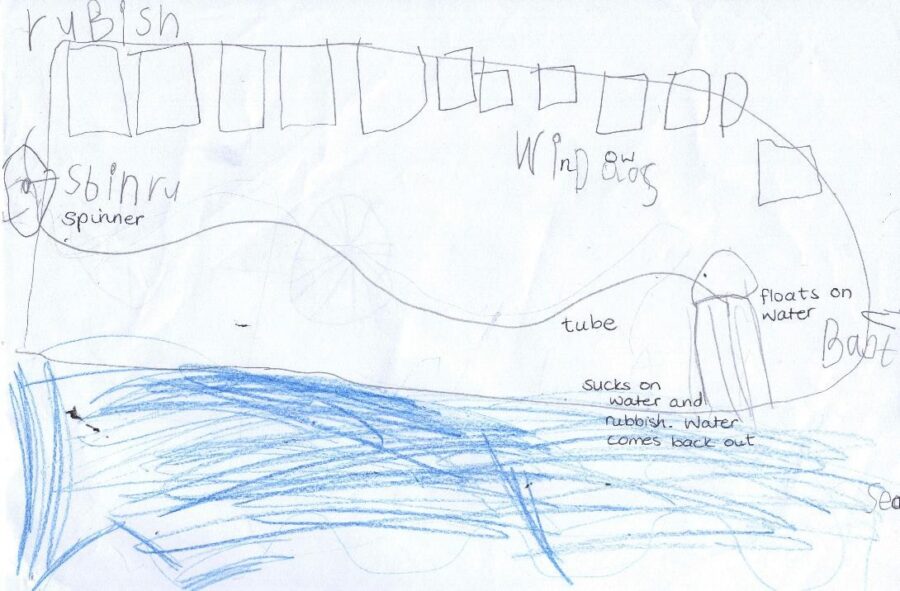
For the 2025–2026 academic year, the Southampton ProtoTeam selected Year 1 pupil Mylah’s inventive design, the ‘Sea Boat Filter’, transforming a young child’s vision for ocean conservation into a working engineering prototype. A big part of the process is working directly with the pupil as the ‘client’ to ensure the final prototype closely matches their original competition design.
Tim shares how the team collaborated with Mylah: “The team visited Mylah and her Year 2 class at Hunnyhill Ormiston Academy on the Isle of Wight in March, before the prototype was completed. Everyone in Mylah’s class felt it was a good idea to build the water-borne waste collecting boat that the students were working on, to try to collect floating waste from the River Medina, near the school.”
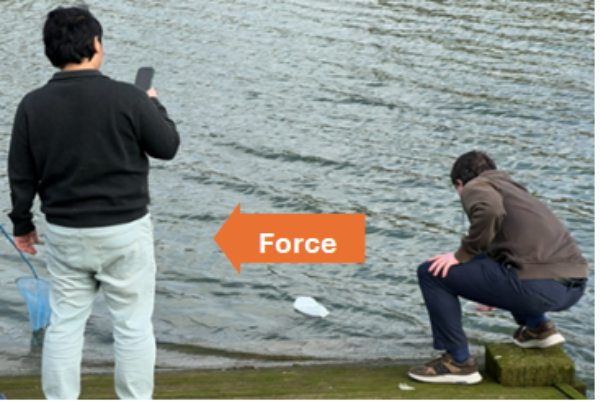
“On the River Medina, the students tested the force needed to direct waste floating down the river, also blown by the wind. The students presented to Mylah and her class their solution for directing waste to a collector using a line of bubbles, a novel, fish-friendly idea which they had tested at the University. Mylah had a chance to chat to the students and see what her Year 1 idea had become and to make suggestions on the design.”
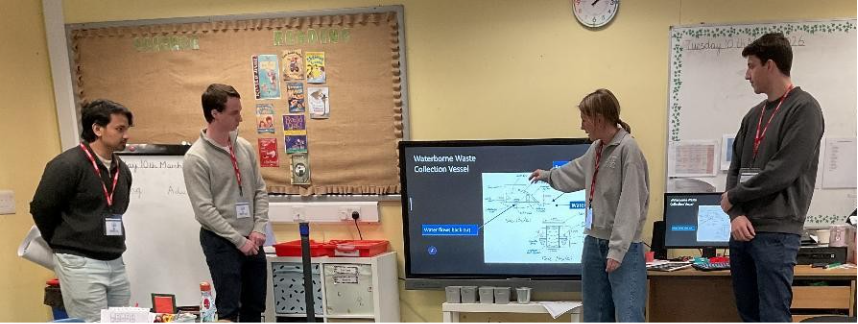
“With the notable support of the class teachers, the whole class prepared pictures to suggest how the current boat design could be made more appealing. We appreciated Tamara, a Hunnyhill Ormiston Academy teacher, returning the visit and coming to the University’s Science and Engineering Day in March with her children.”
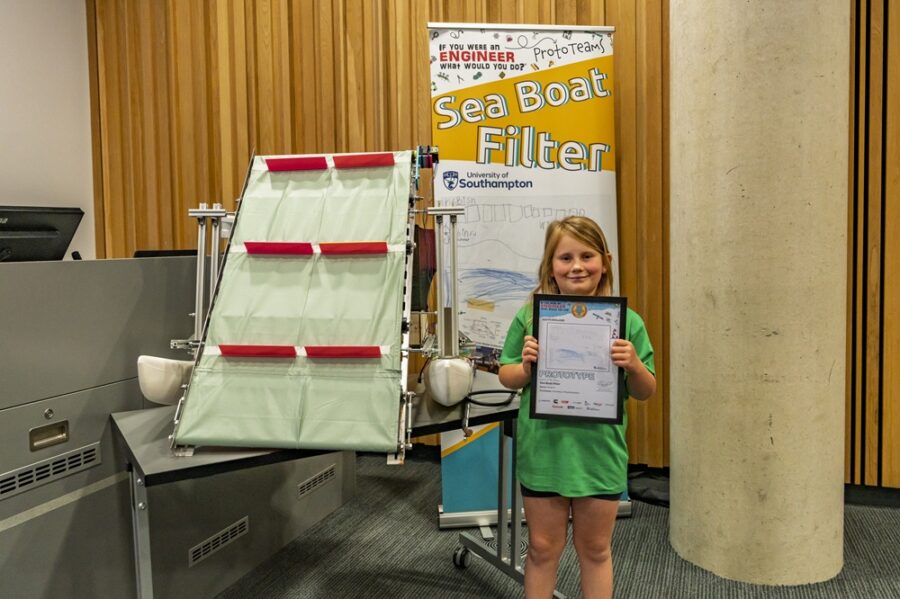
The finished prototype was unveiled at Primary Engineer regional South England award ceremony on 10th June 2026 and was a memorable moment for all involved.
“There is always a wonderful sense of anticipation as the prototype is revealed. For children such as Mylah, it is tangible proof that their imagination matters and that their ideas have been taken seriously. For the parents, it is an opportunity to see what their child’s creativity has inspired. And for our students, it is the moment when months of design, testing, setbacks and refinement suddenly acquire a very human meaning.”
“We find these occasions genuinely moving. We are not simply presenting a machine. We are completing a journey from a child identifying a problem, through engineering development, to something real that can be seen, touched, and demonstrated. Sharing that moment with the child and their family is an enormous privilege, and it is one of the things we enjoy most about working with Primary Engineer.”
Success at The Primary Engineer MacRobert Medal
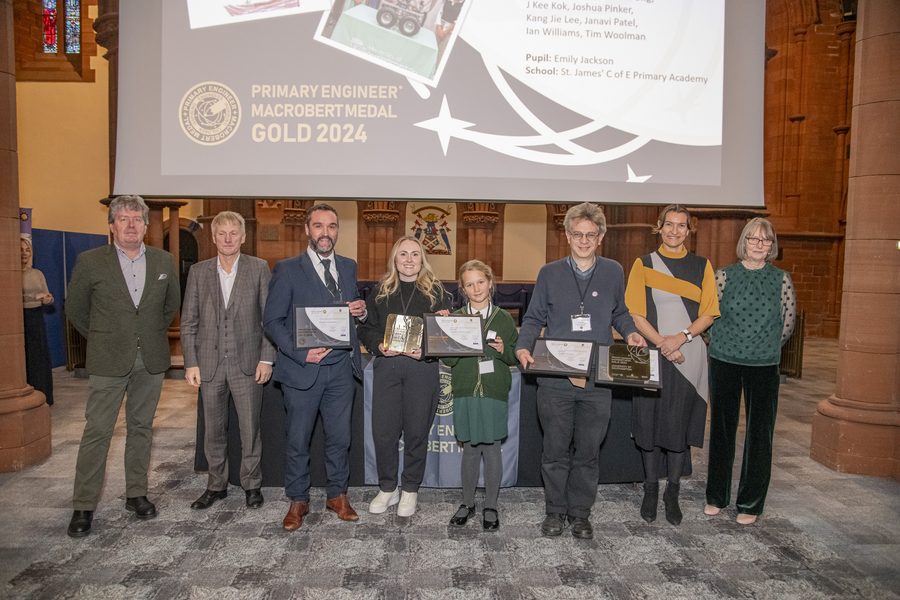
The University of Southampton has yielded an extraordinary track record of national recognition at the annual prestigious Primary Engineer MacRobert Medal awards:
- Seed Planting Drone | Emily at St. James C E Primary Academy — Gold Medal Winner (2024)
- 4 Bin Swopper | Maisie at Everdones Primary School — Silver Medal Winner (2025)
- Sea Boat Filter | Mylah at Hunnyhill Ormiston Academy — Gold Medal Winner (2026)
The medal celebrates the creativity and innovation demonstrated by pupils and engineers working together to bring an engineering solution to life. Teams enter the Primary Engineer MacRobert Medal each year in a bid to win Gold, Silver or Bronze medals as well as the public-voted Commendation Medal which is decided by a judging panel comprised of senior figures from industry, education and government. Reflecting the spirit of the MacRobert Award, the medal is supported by The MacRobert Trust, Weir PLC, and Christopher Ward.
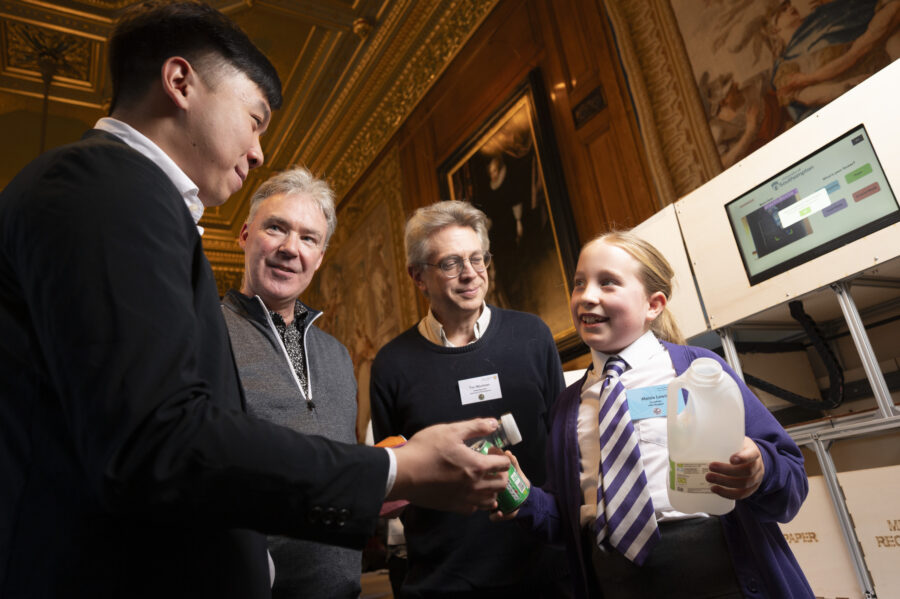
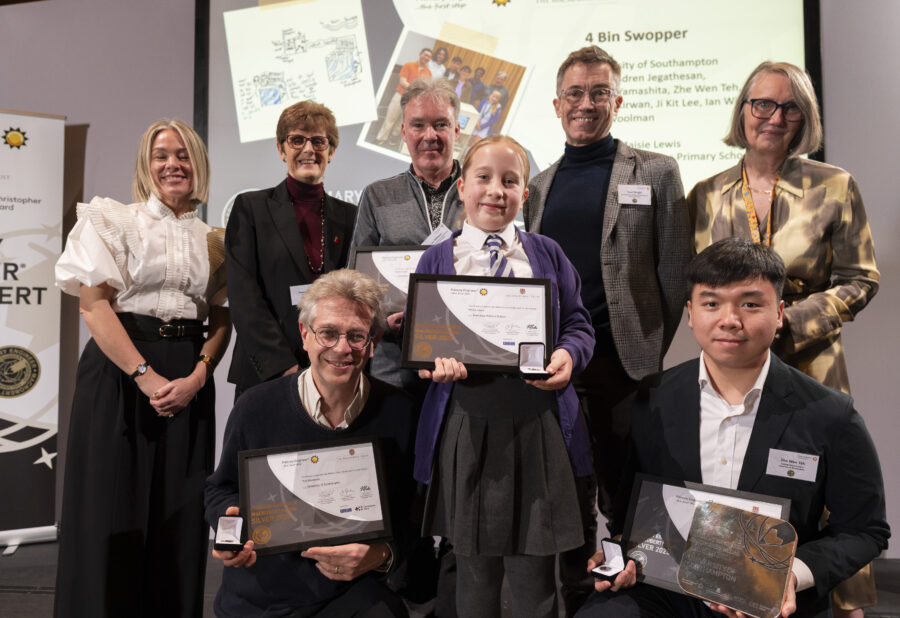
Remembering their 2025 Silver win, Tim remarked: “It was great to be able to show other teams the 4 Bin Swopper in action at the MacRobert Medal award event in 2025, together with the many families and visitors celebrating children inspiring engineers inspiring children. Thanks to tweaks from Zhe Wen, one of the student team, the ‘smart recycling bin’ prototype even sorted waste on-camera, so the reasonably accurate image-recognition, trained through thousands of photos of waste items, felt like an award-winning achievement. Seeing the range of other prototypes from the regions around the country and how the Primary Engineer team appreciates the range of engineering talent applied, motivates us to continue our collaboration”.
Ahead of the 2026 award ceremony, Tim said “We appreciate joining in with a community of teams across the country building a prototype from a pupil’s concept and reuniting members of the student team who have now become graduate engineers. It is a very positive occasion to celebrate widespread efforts from many people and be able to bring back to colleagues a story which also represents their wider achievement in fostering a process which prepares us for such engineering achievements.”
Speaking after the 2026 award ceremony, Professor Ian Williams from the University of Southampton said “Children bring fresh ideas and thinking to big environmental problems, and the Sea Boat Filter concept is a fantastic example of that. We were delighted to help bring the children’s design to life, and winning our third Primary Engineer MacRobert Medal in a row is a proud moment for us, and proof that great engineering starts with curiosity at any age.”
Conclusion
Tim rounded off to say “The University of Southampton’s Primary Engineer team genuinely delight in the continually developing challenge in bringing engineering opportunities closer to a wide audience, and, in the case of pupils, opening their minds to future possibilities. The Primary Engineer purpose and leadership are visible and strong. Their consistent ability to achieve the outreach that the engineering community seeks, means we are grateful to support them through our partnership. All our interactions are friendly, pursue good intent, and between us leave a legacy of mutual inspiration. We really enjoy bringing together children’s imagination and rigorous engineering. The ideas have a genuine human and social purpose, but they also challenge our students to address safety, sustainability, accessibility, cost, and manufacturability. Seeing a child’s sketch on a page turned into a credible prototype is immensely rewarding. It creates a shared experience in which children see their ideas valued, and university students learn that good engineering begins with listening, collaboration, and taking responsibility for shaping the future”.
Get involved
Follow the story: Read all of the updates about ‘Sea Boat Filter’ prototype here.
Share your experience: Huge thank you to The University of Southampton for sharing these valuable insights. If you have worked with us and want to share your experiences, contact us on marketing@Primaryengineer.com
Learn more: Learn more about our Primary Engineer MacRobert Medal here.