A Great Final update on the Sea Boat Filter prototype!
Building the final Sea Boat Filter prototype!
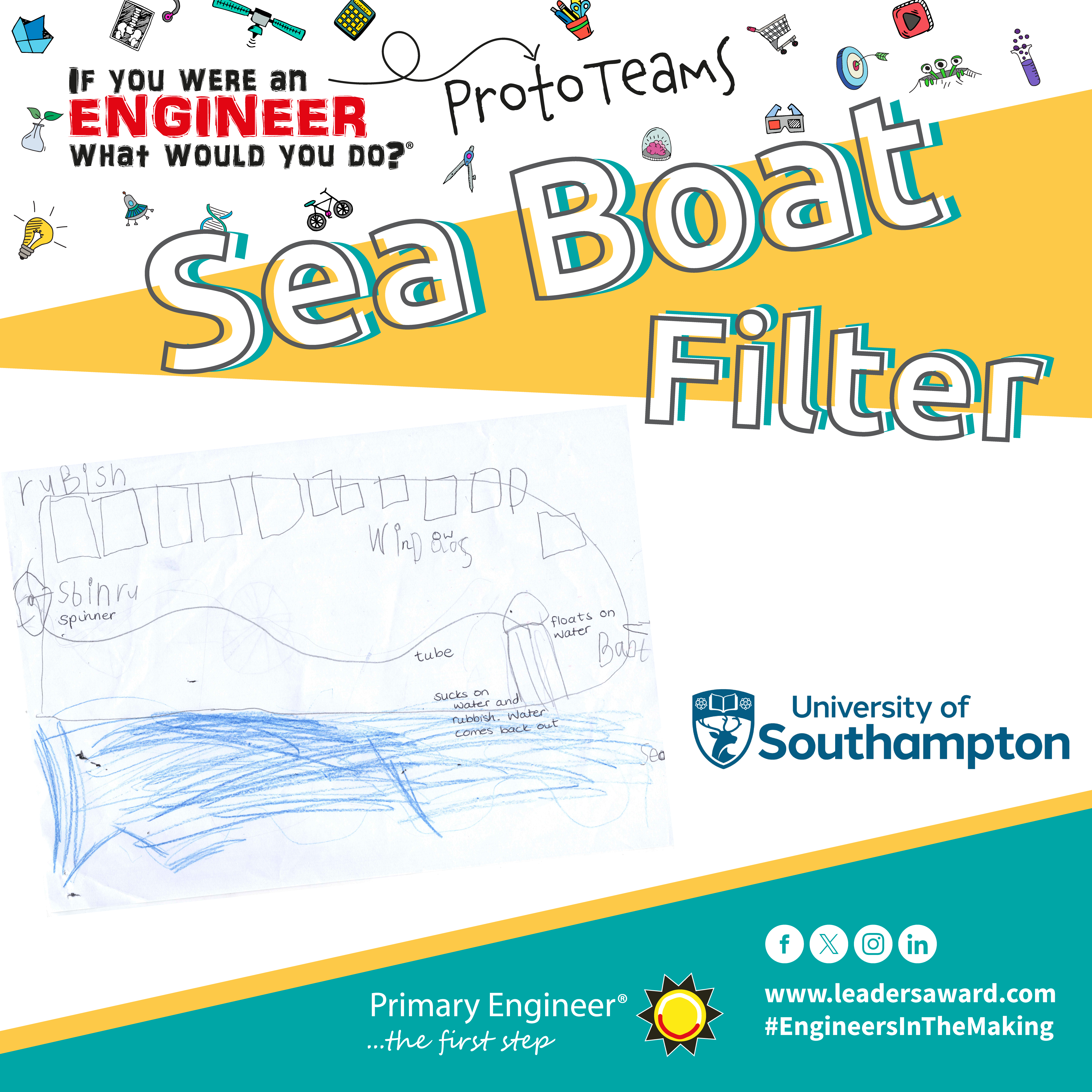
To complete the waterborne waste collecting boat Sea Boat Filter prototype, inspired by Mylah’s Sea Boat Filter concept, the five engineering students from the University of Southampton brought together all the individual systems they had designed and tested throughout the project.
Earlier testing had shown that a bubble curtain could successfully direct floating waste towards a collection point. The final challenge was to build a complete prototype capable of collecting that waste and lifting it from the water.
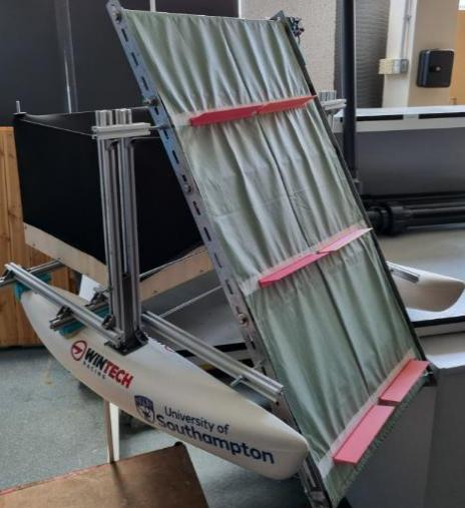
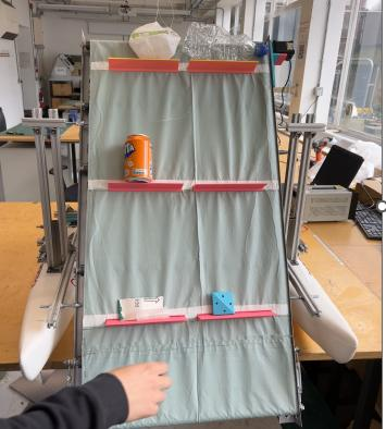
In the Design Workshop, the team assembled the conveyor system using a flexible belt fitted with specially designed three dimensional printed baffles. The conveyor was mounted onto an aluminium frame alongside a waste collection box and supported by two floating hulls.
To ensure the weight of the structure was distributed safely across the borrowed hulls, the students designed and manufactured a custom three dimensional printed bracket. Foam cushioning was also added to protect the plastic hulls from damage.
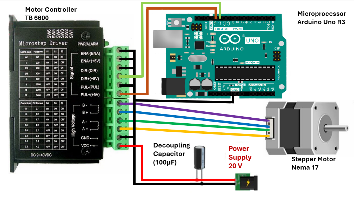
The conveyor system was powered by a motor controlled through a microprocessor and custom electrical circuit built by the team. This completed the core structure of the waterborne waste collecting boat.
Testing in the flume
Before testing the prototype on water, the team carried out dry tests to ensure the conveyor system functioned correctly. These tests showed that the conveyor could successfully lift waste items and transfer them into the collection box.
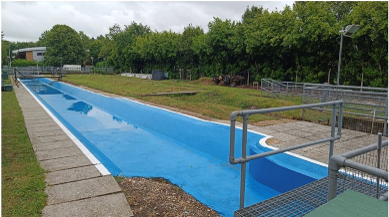
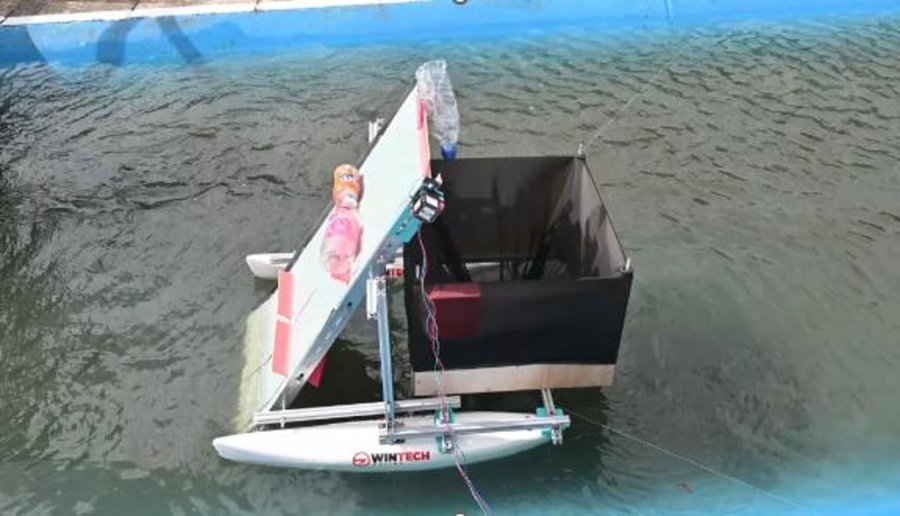
The next stage was to launch the system in the University’s outdoor flume, a controlled water channel that allowed the team to adjust and measure water flow conditions.
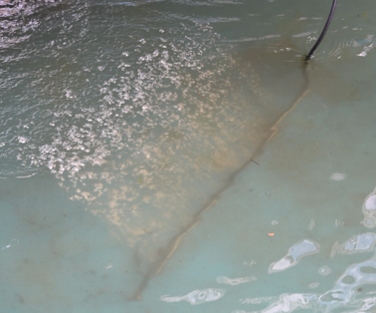
During testing, compressed air was released through small holes in a rubber tube to create the bubble curtain. As water flow increased, the bubbles moved slightly downstream, but still formed a clear line of bubbles that could guide floating waste while allowing fish and other river users to pass through.
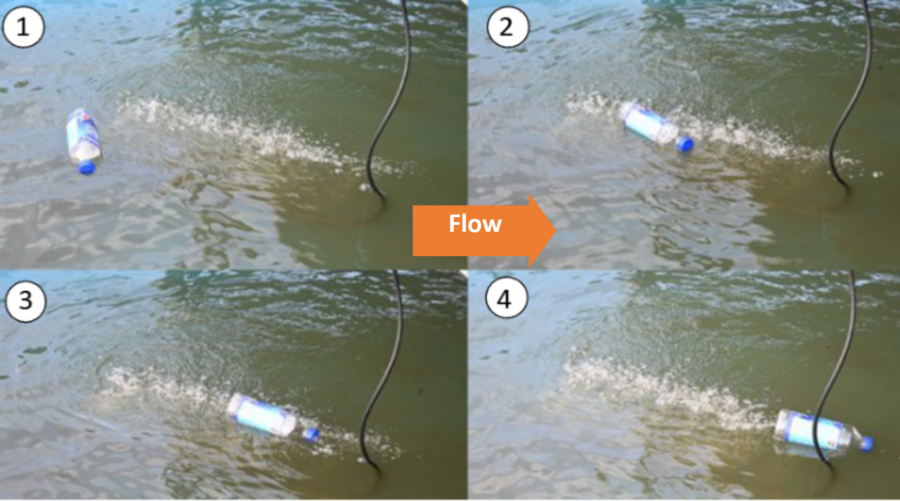
The team then tested whether floating waste would follow the bubble curtain when it was positioned at an angle to the water flow.
The results were encouraging. A floating plastic bottle was successfully guided along the bubble curtain towards the collection point.
Additional tests using different types of waste, including an aluminium can and a larger plastic bottle, demonstrated that the prototype could successfully direct waste towards the conveyor, lift it from the water, and store it within the collection box.
What the results showed
Testing demonstrated that the Sea Boat Filter prototype could operate effectively in shallow water when secured to the riverbank.
The system was able to collect a variety of floating waste items in water flow speeds of up to 0.15 metres per second. These results gave the team confidence that the concept could work in real river environments and help prevent waste from travelling further downstream into the sea.
The students concluded that the design successfully met its core objectives while also identifying areas where future improvements could strengthen performance.
Final prototype features
The final prototype included several practical features designed to improve reliability and usability.
A protective cover was added to shield both the electronics and collected waste from rainfall and splashing water. Small guide arms were also integrated into the design. These help direct waste towards the collection system while reducing the length of bubble curtain required.
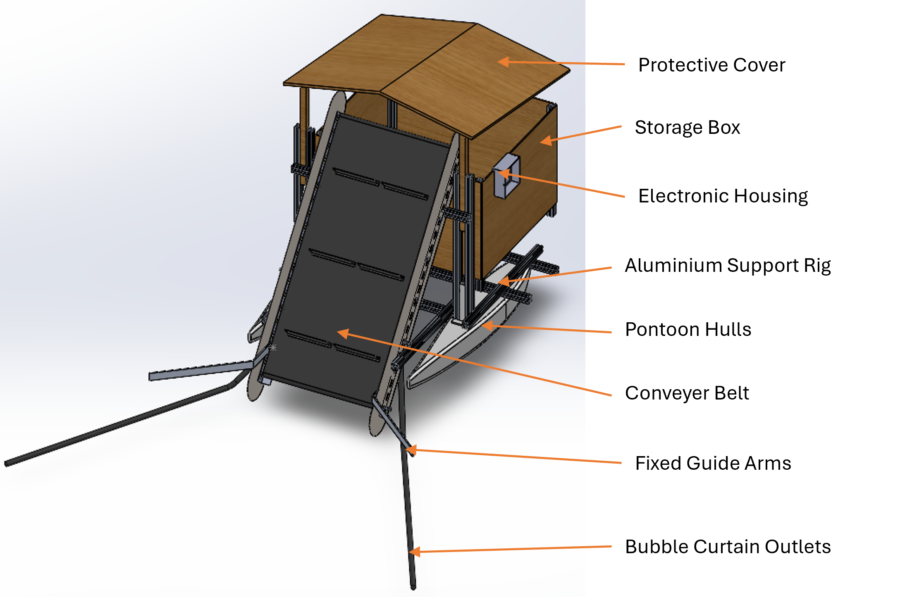
Because the guide arms are much smaller than traditional booms or barriers, they are less likely to interfere with river users. This means the Sea Boat Filter could provide a lower impact alternative to some existing waste collection systems that extend across large sections of a waterway.
Potential improvements
Like all engineering projects, testing identified opportunities for further development.
The team found that additional buoyancy at the front of the hulls, or the use of larger hulls, would improve stability when stronger currents push against the conveyor.
They also identified improvements that could be made to the conveyor system. Adjusting the conveyor angle and refining the belt design could help reduce the risk of waste becoming trapped during operation.
For wider rivers, a longer bubble curtain would be needed. The students suggested that a solar powered compressor could provide a more sustainable and environmentally friendly solution than mains powered equipment.
Future work would also need to examine any potential effects the bubble curtain might have on aquatic ecosystems to ensure the system remains environmentally responsible.
The team also felt there was an exciting opportunity to incorporate some of the creative animal inspired designs suggested by pupils at Hunnyhill Ormiston Academy. These ideas could help make the prototype more visually appealing and encourage greater public interest in tackling river pollution.
Celebrating the project
The Sea Boat Filter project has been a rewarding experience for the student team of Toby, Tilly, Haziq, Alice, and Linus. Throughout the project they combined environmental awareness, engineering design, testing, and problem solving to transform a pupil’s idea into a working prototype.
To showcase their work, the team produced a short project video which appears as part of the University of Southampton School of Engineering Design Show.
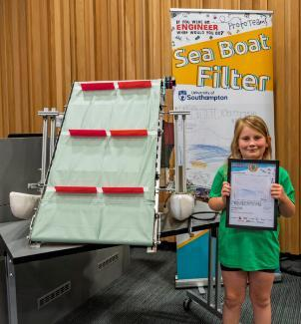
One of the highlights of the project came when the team unveiled the completed prototype to Mylah and her family at the Primary Engineer Leaders Award event for South England, held at the University of Southampton on 10 June.
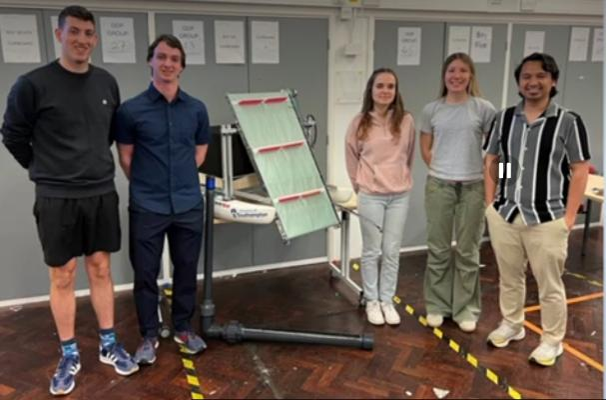
Seeing Mylah’s idea transformed into a real engineering solution was a fantastic way to celebrate the creativity and innovation that inspired the Sea Boat Filter project from the very beginning.
The team hopes the project encourages more young people to explore engineering and reinforces the importance of developing new solutions to protect rivers, coastlines, and marine environments for future generations.