
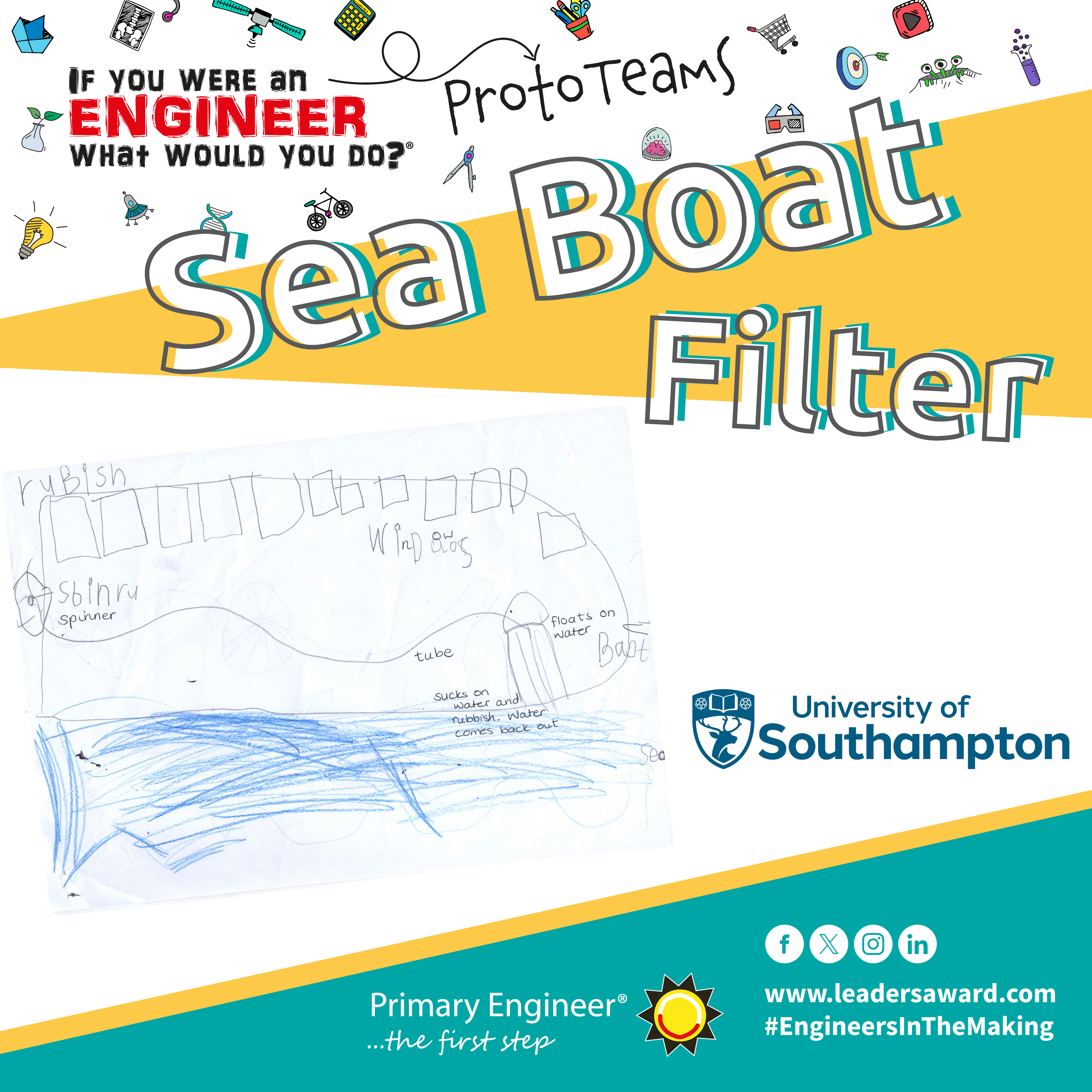
An exciting first update on the Sea Boat Filter!
Introduction to the ProtoTeam!
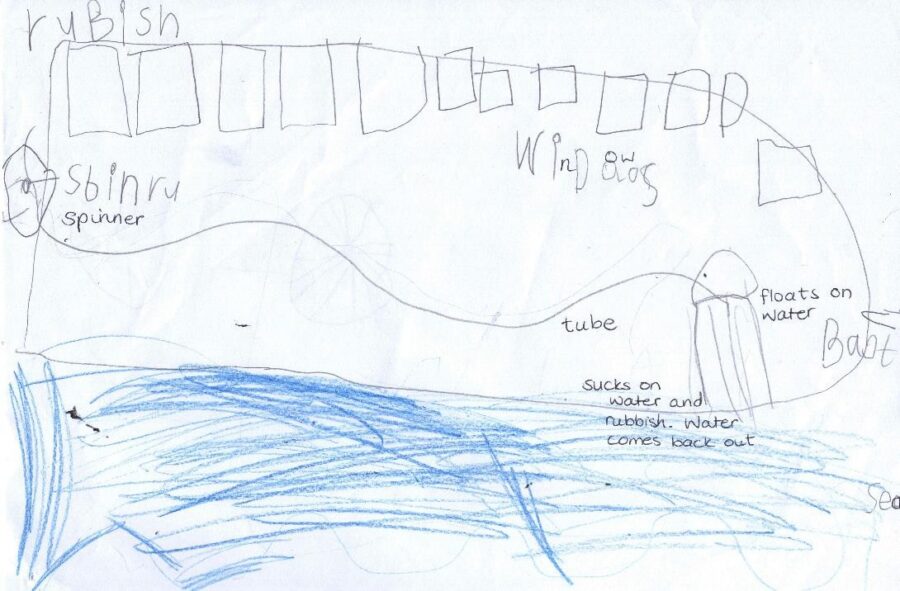
The University of Southampton ProtoTeam has begun an exciting project through the If you were an engineer what would you do competition. Each ProtoTeam chooses one pupil idea from a shortlist and then turns that idea into a real model! This year the team at Southampton chose the Sea Boat Filter, the idea came from Mylah who attends Hunnyhill Ormiston Academy.
Her design focuses on removing waste from rivers and seas! It also encourages people to think about how engineering can protect and support our natural environment.
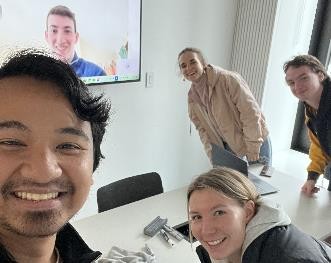
Five final-year engineering students will be working on bringing the design to life, the team includes Toby Batchelor, Tilly Finlay, Haziq Mohd Asri, and Linus Schirm, who all study Mechanical Engineering with Alice Redmill who studies Civil Engineering. Toby grew up on the Isle of Wight so he knows the River Medina well, this helped the team choose it as the main site for their study!
Why did they choose this idea to build?
The Sea Boat Filter stood out for many reasons. The Solent region often sees floating waste in rivers and coastal areas which harms both freshwater and marine life. Mylah understood this and suggested a moving system that can collect plastic and other debris, she also knew that water needs to flow well through the system so it can collect as much rubbish as possible.
The students began by researching the types of waste found in rivers, they studied several existing waste collecting systems: some are fixed in one place and others are shaped like boats, however, each one had limits. This encouraged the team to explore new ideas that could work better and in more locations, they also thought about wildlife river users and the local community. This early planning helped them shape the first stage of their prototype.
Starting the prototype
The team explored a simple but clever idea called a bubble barrier, this creates a line of bubbles in the water: the bubbles rise and gently move floating waste toward a collection point in which fish and boats can still pass through with no problem! At first the students tried to see if the flow of the river could draw in enough air to create the bubbles but their computer model showed that it would not create enough. Because of this they plan to test a compressor in January which will help them learn how much air they need to form a bubble curtain that works well.
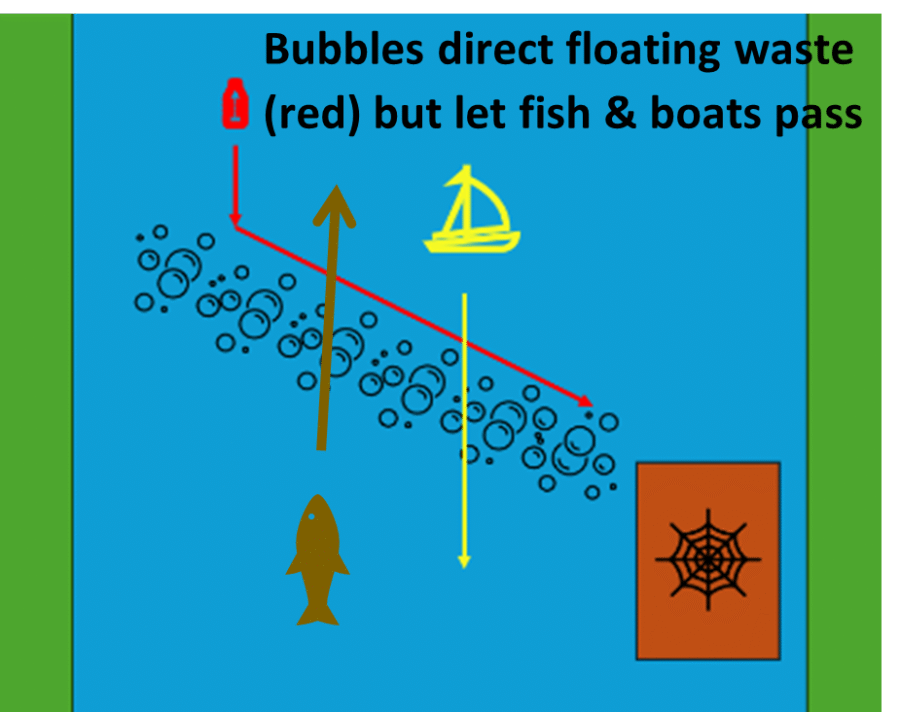
Large bubble barriers already work in places such as Amsterdam. This gives the team confidence but they still need to learn if the idea can work on a smaller moving system if the bubble system uses too much energy they may explore a physical barrier instead! Both ideas still support Mylah’s original aim.
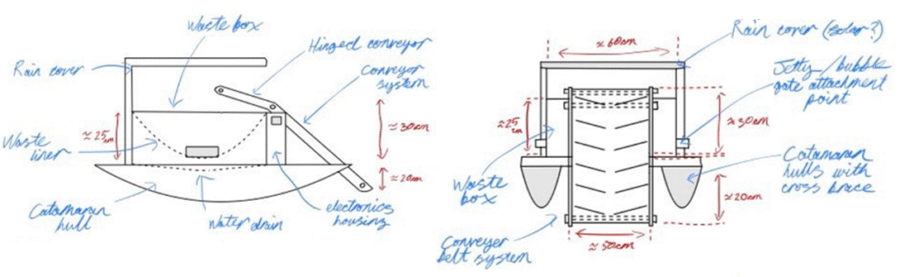
The main collection system uses a conveyor. This lifts waste from the water and drops it into a draining bag. The students are also planning a system that can sense when the bag is full, this makes it easier to remove and replace the bag and helps with recycling. The team has already tested shapes and materials. They built a cardboard model and are exploring a gentle creature themed design which helps make the boat friendly and safe for wildlife.
Next steps
The next phase involves creating detailed models using computer aided design software. From February the team will begin building parts that they can test. They hope to bring these parts together into a full working prototype in March. They also plan to present their progress to Mylah the pupils at Hunnyhill Ormiston Academy!
A visit to the River Medina is planned as well, this will help the students see how their design could work in a real river setting. They also hope to hear ideas and questions from the pupils whose creativity inspired the project. These conversations will help them grow as engineers and learn how real engineering projects develop.
The Sea Boat Filter shows how a simple idea from a young pupil can spark real innovation. The University of Southampton ProtoTeam will continue to share their progress as they turn this thoughtful design into a working solution that could help keep our waterways clean!